

Find Out If You Qualify for Dental Implants
All posts
Cosmetic Dentistry
Professional Teeth Whitening for Sensitive Teeth

Published on:
Nov 16, 2026
Quick answer: Yes. Most people with sensitive teeth can still whiten. Sensitivity is the most common side effect of whitening, but it is usually temporary. A lower-strength gel in custom trays, a desensitizing agent, and an exam first to rule out exposed roots, cavities or gum problems make professional whitening far more comfortable than a store-bought kit.
You're getting ready for a family photo, and the mirror is not being kind. Your teeth look a shade darker than you remember.
So you try a box of whitening strips. By the second night, a sip of cold water feels like a jolt of electricity. You quit, and your teeth stay exactly where they were.
If that sounds familiar, you're not imagining the pain. And you're not out of options.
The simple answer is that yes, sensitive teeth can be whitened.
The more honest answer is that it depends on why your teeth are sensitive in the first place, how strong the gel is, how long it sits on your teeth, and whether anyone checked your mouth before you started.
That's what this guide walks through.
Can You Whiten Your Teeth If They're Already Sensitive?
In most cases, yes. But "sensitive teeth" can mean two different things.
Everyday sensitivity, the quick twinge from cold drinks or brushing, usually comes from exposed dentin, the softer layer under enamel. A review of prevalence studies put the best estimate at about 11.5% of people, with much higher numbers in some groups (Zeola et al., 2019).
Whitening sensitivity is different. It tends to start during treatment and fade after you stop.
The two can overlap. If your teeth already react to cold, it makes sense to start with a gentler plan rather than find out the hard way.
Sensitive teeth are a reason to plan carefully, not a reason to give up on a brighter smile.
Why Does Teeth Whitening Cause Sensitivity?
Professional whitening gels use hydrogen peroxide or carbamide peroxide, which breaks down into hydrogen peroxide (Carey, 2014).
Peroxide is a small molecule. It travels through enamel and dentin to reach stains, and some of it reaches the pulp, where the tooth's nerve lives. One leading explanation is that peroxide directly activates pain-sensing receptors in the pulp (Markowitz, 2010).
That's why whitening sensitivity often feels like short, sharp "zings" rather than a constant ache.
Tooth sensitivity is the most common side effect of whitening, and it is usually temporary. Gum irritation is the other common complaint (Carey, 2014).
In one clinical trial of in-office whitening, sensitivity generally eased or disappeared within 24 hours of each session (Peixoto et al., 2018).
If you want the chemistry in more detail, our post on how teeth whitening works covers it.
The Biggest Difference: Gel Strength and Contact Time, Not the Brand on the Box
If you remember one thing, make it this: stronger gels are more likely to cause sensitivity.
For take-home tray whitening, a review of clinical trials found that 10% carbamide peroxide caused less frequent and less intense sensitivity than stronger gels, with no significant difference in color change (de Geus et al., 2018).
For in-office whitening, low- and medium-strength hydrogen peroxide gels carried about a one-third lower risk of sensitivity than high-strength gels. Overall color change was not significantly different (Maran et al., 2020).
Where you whiten matters less than people assume. When researchers pooled trials comparing at-home and in-office whitening, they found no significant difference in sensitivity or results, though the protocols varied a lot (de Geus et al., 2016).
And the blue light you see in ads? An analysis of in-office studies found that light activation raised the odds of sensitivity and did not improve results when high-strength gels were used (He et al., 2012).
Lower and slower is usually gentler.
Which Whitening Option Is Best for Sensitive Teeth?
Here's how the main options compare when sensitivity is the priority.
| Option | How it works | What research says about sensitivity | Often suits |
|---|---|---|---|
| Custom-tray whitening at home | Lower-strength gel in trays made for your teeth, worn over days to weeks | 10% carbamide peroxide caused less sensitivity than stronger gels, with similar color change (de Geus et al., 2018) | Sensitive teeth and people who can wait a few weeks |
| In-office whitening | Medium- or high-strength gel applied by the dental team | Lower-strength gels cut sensitivity risk by about a third (Maran et al., 2020); added light raised it (He et al., 2012) | Faster change for people who tolerate it well |
| Combined (trays, then an in-office visit) | A take-home phase followed by an in-office session | At-home and in-office approaches showed similar sensitivity overall; protocol details matter most (de Geus et al., 2016) | Deeper or stubborn staining, after an exam |
| Store-bought strips and kits | One-size products used without a dental exam | Sensitivity is still the most common side effect, and no one checks for problems first (Carey, 2014) | Mild surface stains on healthy teeth, used with care |
How Do Dentists Make Whitening Comfortable for Sensitive Teeth?
A professional plan has a few more tools than a drugstore box.
Desensitizing agents. Potassium nitrate and sodium fluoride, used before or during whitening, reduced the share of patients who felt sensitivity. The same review found no consistent effect on whitening results (Wang et al., 2015).
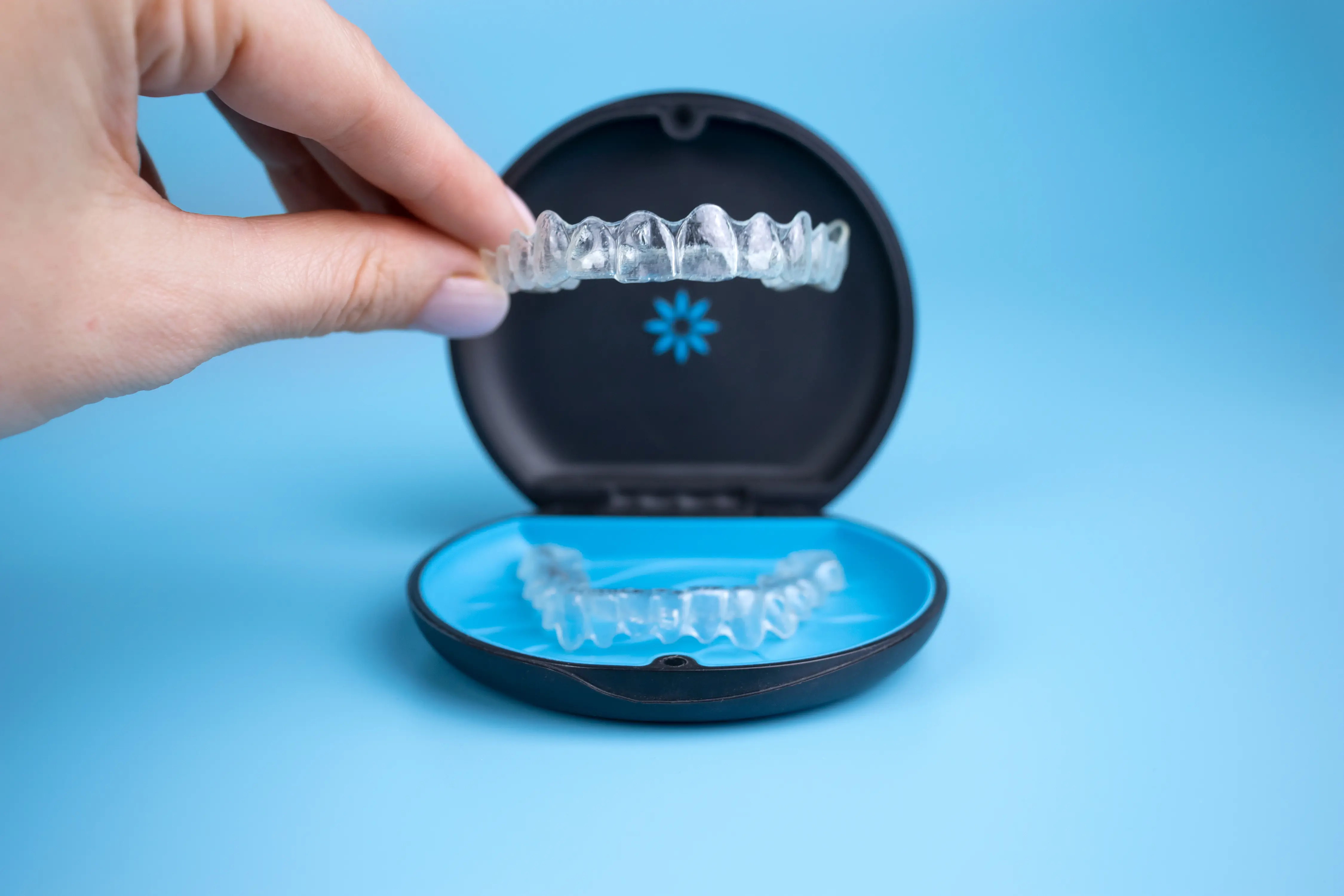
Custom-fitted trays. Trays made from impressions of your teeth hold the gel against your enamel and keep more of it off your gums.
Gentler pacing. Your dentist can lower the strength, shorten wear time, or add rest nights if a tooth starts to react.
Fixing problems first. Exposed roots, cavities, cracks and leaking fillings are easier to treat before whitening than in the middle of it.
At Grand Mission Dentistry, Dr. William Sung uses the KöR Whitening system for professional teeth whitening. It pairs custom trays with refrigerated gel worn nightly for two to three weeks, with desensitizing agents built in. The KöR Max, Ultra and Ultra-T protocols add an in-office session after the at-home phase.

What We Look at Before Recommending Whitening for Sensitive Teeth
A good whitening plan starts with one question: where is the sensitivity coming from?
At our Richmond, TX office, which also cares for patients from Sugar Land, Katy, Fulshear and Rosenberg, the whitening consultation looks at:
- Gum health and recession. Whitening works best on healthy gums. Receding gums leave root surfaces exposed, and those may need periodontal care first.
- Cavities, cracks and old fillings. These are easier to repair before whitening than during it.
- Front crowns, veneers and bonding. Whitening only lightens natural teeth. Existing restorations keep their shade, which can leave a visible mismatch (Carey, 2014).
- The type of stain. Coffee and tea stains respond differently from deep, internal discoloration such as tetracycline staining, which KöR's Ultra-T protocol is designed for.
- How much sensitivity you already have. This helps decide the gel, the schedule, and whether to start a desensitizing toothpaste beforehand.
- Your timeline. A wedding in three weeks calls for a different plan than "sometime this year."
The right plan is the one your teeth can actually finish.
What Are the Risks and Limits of Whitening Sensitive Teeth?
Professional whitening is widely used, but it isn't risk-free, and it can't do everything.
- Temporary sensitivity and gum irritation are the most common side effects (Carey, 2014).
- A gentler plan usually means a slower one. You may wait a little longer to see your final shade.
- Whitening does not treat the cause of everyday sensitivity. Exposed roots or worn enamel still need their own care, and options such as dental bonding can be discussed.
- Crowns, veneers and bonding won't lighten. If they show when you smile, you may want to update them after whitening, sometimes with porcelain veneers.
- Results fade without upkeep. Grand Mission's whitening guidance notes that most patients see some color relapse within six months to a year without maintenance, depending on diet.
One more limit is worth saying plainly. Pain that is severe, lasts more than a day or two, or centers on one tooth is not typical whitening sensitivity. Stop and call the office.
How Much Does Professional Teeth Whitening Cost?
At Grand Mission, KöR protocols are priced by how much whitening your teeth need. These are the practice's estimated ranges:
- KöR Home (at-home only): $400 to $600
- KöR Max (at-home plus in-office): $600 to $900, the most common protocol
- KöR Ultra (advanced combined): $900 to $1,400
- KöR Ultra-T (tetracycline staining): $1,200 to $1,800
- Touch-up maintenance: $100 to $200
Your exact fee depends on the protocol your teeth need, which is decided at the consultation.
A few ways patients manage the cost: members of the Grand Mission Dental Savings Plan get 30% off whitening, and Cherry financing offers 0% APR options for qualified patients.

What Can I Do at Home to Keep Whitening Comfortable?
Small habits make a real difference once you start.
- Ask whether to use a potassium nitrate toothpaste before and during whitening. Potassium nitrate is one of the desensitizers shown to reduce bleaching sensitivity (Wang et al., 2015).
- Stick to the wear time your dentist sets. Wearing trays longer than instructed only adds peroxide exposure.
- Use a small amount of gel and wipe any excess off your gums.
- Skip a night if a tooth flares up, and tell the office.
- Go easy on very cold or very hot drinks right after a session if your teeth feel tender.
Overusing strips is one of the most common whitening mistakes. Our post on things to keep in mind when you whiten your teeth explains why.
Frequently Asked Questions
Is the whitening consultation at Grand Mission free?
Yes. The practice offers a free whitening consultation, where your starting shade is recorded and the KöR protocol is chosen for your staining and sensitivity.
Can I whiten my teeth after finishing Invisalign?
Many Grand Mission patients follow Invisalign treatment with KöR whitening, and the practice's Invisalign special includes KöR whitening gel. Your dentist will confirm timing once your aligner treatment is complete.
Does the Grand Mission Dental Savings Plan discount whitening?
Yes. Plan members get 30% off whitening. The plan also covers desensitizing treatments. Plan discounts can't be combined with dental insurance.
Will gentler whitening give me a less white result?
Not necessarily. In pooled trials, 10% carbamide peroxide reached a color change similar to stronger at-home gels while causing less sensitivity (de Geus et al., 2018). It may simply take a little longer.
How long will my results last?
That depends mostly on maintenance and diet. KöR treatment includes an at-home maintenance kit, and most patients need one to two nights of touch-up every few months. Coffee, tea, red wine and tobacco speed up fading.
Final Takeaways
- Most people with sensitive teeth can whiten with the right plan.
- Whitening sensitivity is common and usually temporary.
- Lower-strength gels cause less sensitivity and can reach similar results.
- Light activation adds sensitivity risk without clear benefit when strong gels are used.
- Desensitizers, custom trays and an exam first make whitening more comfortable.
- Whitening won't change crowns, veneers or bonding, or treat the cause of everyday sensitivity.
Ready for a whitening plan your teeth can handle?Book a free whitening consultation at Grand Mission Dentistry in Richmond, or call (281) 789-8836. You'll leave knowing which protocol fits your teeth and what it will cost.
Research References
- Zeola LF, Soares PV, Cunha-Cruz J. Prevalence of dentin hypersensitivity: systematic review and meta-analysis. J Dent. 2019;81:1-6. https://doi.org/10.1016/j.jdent.2018.12.015
- Carey CM. Tooth whitening: what we now know. J Evid Based Dent Pract. 2014;14 Suppl:70-76. https://pubmed.ncbi.nlm.nih.gov/24929591/
- Markowitz K. Pretty painful: why does tooth bleaching hurt? Med Hypotheses. 2010;74(5):835-840. https://pubmed.ncbi.nlm.nih.gov/20045265/
- Peixoto AC, Vaez SC, Pereira NAR, et al. High-concentration carbamide peroxide can reduce the sensitivity caused by in-office tooth bleaching: a single-blinded randomized controlled trial. J Appl Oral Sci. 2018;26:e20170573. https://doi.org/10.1590/1678-7757-2017-0573
- de Geus JL, Wambier LM, Boing TF, Loguercio AD, Reis A. At-home bleaching with 10% vs more concentrated carbamide peroxide gels: a systematic review and meta-analysis. Oper Dent. 2018;43(4):E210-E222. https://doi.org/10.2341/17-222-L
- Maran BM, Matos TP, de Castro ADS, et al. In-office bleaching with low/medium vs. high concentrate hydrogen peroxide: a systematic review and meta-analysis. J Dent. 2020;103:103499. https://doi.org/10.1016/j.jdent.2020.103499
- de Geus JL, Wambier LM, Kossatz S, Loguercio AD, Reis A. At-home vs in-office bleaching: a systematic review and meta-analysis. Oper Dent. 2016;41(4):341-356. https://doi.org/10.2341/15-287-LIT
- He LB, Shao MY, Tan K, Xu X, Li JY. The effects of light on bleaching and tooth sensitivity during in-office vital bleaching: a systematic review and meta-analysis. J Dent. 2012;40(8):644-653. https://pubmed.ncbi.nlm.nih.gov/22525016/
- Wang Y, Gao J, Jiang T, Liang S, Zhou Y, Matis BA. Evaluation of the efficacy of potassium nitrate and sodium fluoride as desensitizing agents during tooth bleaching treatment: a systematic review and meta-analysis. J Dent. 2015;43(8):913-923. https://doi.org/10.1016/j.jdent.2015.03.015
Latest Post
- Monday 9 am–7 pm
- Tuesday 10 am–8 pm
- Wednesday 10 am–8 pm
- Thursday 8 am–6 pm
- Friday 8 am–6 pm
- Saturday 8 am–3 pm
- Sunday – Closed