
Find Out If You Qualify for Dental Implants
All posts
General Dentistry
Airflow One and Guided Biofilm Therapy: How It Works and What the Research Shows
Published on:
June 21, 2023
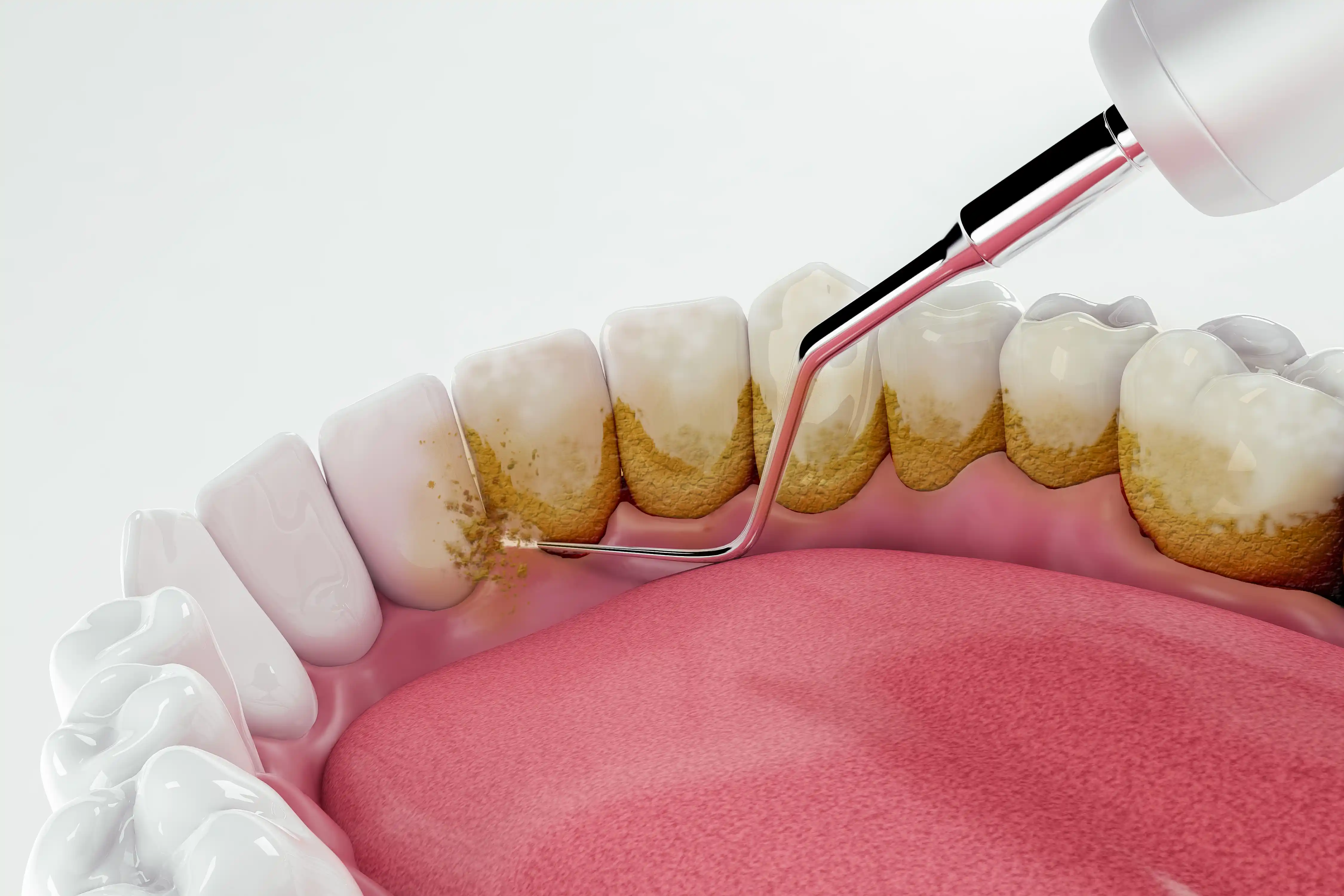
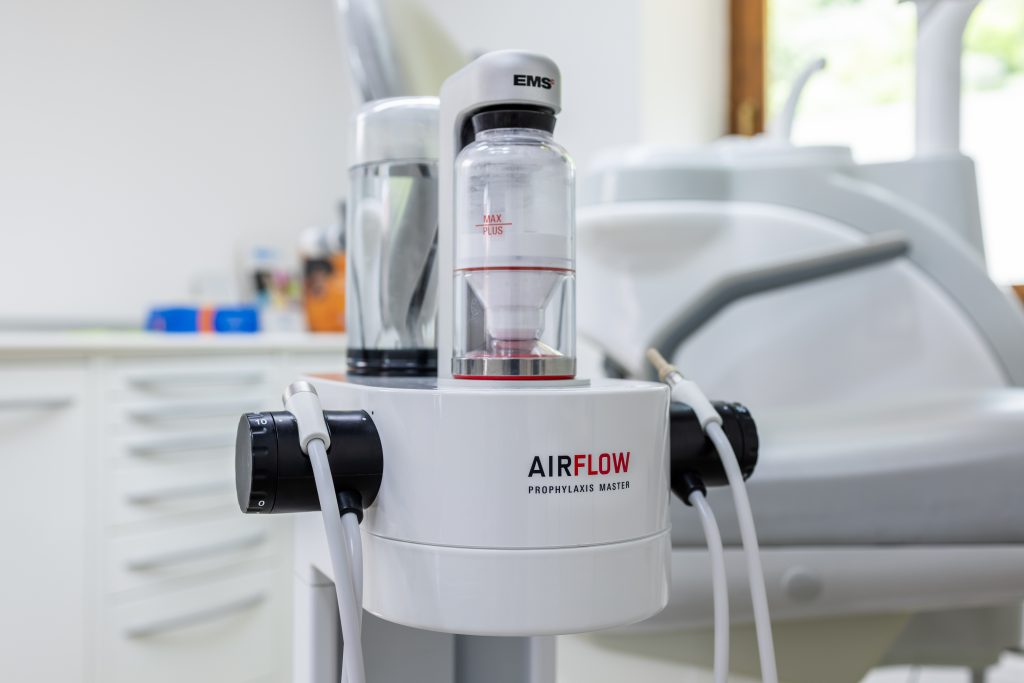
Airflow One is the air-polishing cleaning we offer at Grand Mission Dentistry, and Guided Biofilm Therapy (GBT) is the step-by-step protocol it belongs to. Instead of relying mainly on scraping, air polishing uses a jet of air, water and fine powder to clean plaque and stains off the teeth (Graumann et al., 2013).
This guide explains how a GBT visit works, what the research says about comfort and results, where the evidence is still thin, and who should talk to us first. Each claim links to a published study, and the full reference list is at the end. For booking details, see our Airflow One cleaning service.
What Are Airflow One and Guided Biofilm Therapy?
Air polishing pushes fine powder particles through a stream of compressed air and water to clean tooth surfaces (Graumann et al., 2013). Early systems used sodium bicarbonate (baking soda) powder. Glycine powder is gentler on exposed roots and gums (Bühler et al., 2016b), and GBT uses erythritol, a low-abrasive powder (Vouros et al., 2022; Selimović et al., 2023).
Guided Biofilm Therapy combines erythritol air polishing with a thin ultrasonic (piezo) tip (Vouros et al., 2022). In published GBT protocols, plaque is first stained with a disclosing dye so it can be seen. It is then removed with air polishing, any hardened tartar is removed with the ultrasonic tip, and the area is air-polished again (Cyris et al., 2024).
Why Biofilm Is the Target
Dental plaque is a biofilm: a sticky film of bacteria that builds up on teeth. When it stays in place, it causes gingivitis, with red, swollen gums that bleed easily. In some people, gingivitis can progress to periodontitis and loss of the bone that supports the teeth (James et al., 2017). Around dental implants, plaque is the cause of the gum inflammation called peri-implant mucositis (Berglundh et al., 2018).
That is the idea behind staining the plaque first: you and your hygienist can see exactly where it is building up, and those areas get cleaned (Cyris et al., 2024).
What Happens at an Airflow One Visit
- Check-up first. We review your medical history and look at your teeth and gums before cleaning.
- Show the plaque. A disclosing dye stains plaque so it can be seen (Cyris et al., 2024).
- Air polish. A jet of air, water and erythritol powder removes the stained plaque and surface stain (Vouros et al., 2022; Graumann et al., 2013).
- Remove tartar. A thin ultrasonic tip removes any hardened tartar that remains (Vouros et al., 2022; Cyris et al., 2024).
- Final check. Areas are air-polished again where needed (Cyris et al., 2024), and we go over anything worth changing in your routine at home.
If you are due for a regular visit, our professional cleanings page explains what is included.
Does It Feel Different From a Regular Cleaning?
For most people, the research suggests it is at least as comfortable. A systematic review of nine studies found that discomfort during gum treatment was consistently equal or lower with glycine or erythritol powders than with hand instruments or ultrasonic scalers (Bühler et al., 2016a). A 2022 meta-analysis of patients in long-term gum maintenance found lower pain scores and higher acceptance with air polishing (Tan et al., 2022), and in a 50-patient trial, patients rated GBT more favorably than conventional scaling (Vouros et al., 2022).
That isn’t true for everyone. In a trial of 43 people being treated for an implant infection (peri-implantitis), adding erythritol air polishing caused more discomfort than ultrasonic and hand instruments alone, especially for women (Selimović et al., 2023). If anything feels sharp or sensitive, tell your hygienist so we can adjust.
How Well Does It Clean?
In a randomized trial of 50 people in gum maintenance, GBT and conventional scaling and root planing both reduced plaque and gum bleeding after six weeks. GBT took about 15% less chair time, roughly 5 minutes (Vouros et al., 2022).
A 2022 meta-analysis of four maintenance trials found that repeated air polishing gave results similar to conventional instruments for pocket depth, bleeding and gum attachment (Tan et al., 2022). In short, the evidence supports GBT as a comfortable alternative to traditional cleaning, not as a method that cleans dramatically better.
Stain Removal, and What It Won’t Do
Air polishing removes surface stain more efficiently than a rubber cup and polishing paste (Graumann et al., 2013), so stains on the surface of the teeth can lift during the cleaning. It does not bleach teeth, though. If you want teeth lighter than their natural shade, ask about teeth whitening.
Is It Gentle on Teeth and Gums?
The powder matters. In a systematic review of lab and clinical studies, sodium bicarbonate and calcium carbonate powders caused deeper defects in exposed root surfaces than glycine, and glycine showed less potential to harm the gums than sodium bicarbonate or hand instruments. The authors concluded that glycine powder may be safely applied to root surfaces and gums (Bühler et al., 2016b).
Erythritol, the powder used in GBT, is a newer low-abrasive powder (Selimović et al., 2023) that was not included in that review.
If You Have Gum Disease
GBT can be part of gum disease treatment, but it isn’t a shortcut. In a 2024 trial of 60 patients with advanced periodontitis, treated by supervised dental students, GBT and conventional deep cleaning gave comparable reductions in pocket depth, and GBT took somewhat less time (Cyris et al., 2024).
If you have been told you have deep pockets or bone loss, your plan may still include a deep teeth cleaning and ongoing periodontal care. Not sure whether your gums are healthy? Here are the signs of gum disease to look for.
If You Have Dental Implants
Air polishing is used to clean around implants, but the evidence is limited. In a 2022 meta-analysis, two implant-maintenance trials found less pocket depth and bleeding with air polishing than with conventional cleaning, and the authors described this evidence as limited (Tan et al., 2022).
It is not a cure for implant infection. In a 12-month trial of people with peri-implantitis, adding erythritol air polishing to standard non-surgical treatment gave no extra clinical benefit, and neither approach resolved the infection (Selimović et al., 2023). If your gums bleed or swell around an implant, see our page on failing dental implants. If you have a full-arch bridge, our guide to caring for All-on-4 implants covers daily cleaning under the bridge.
Who Should Check With Us First
A 2013 review lists conditions in which sodium bicarbonate powders should not be used, including a sodium-restricted diet, high blood pressure, respiratory illness, infectious disease, kidney problems and some metabolic and adrenal conditions. Sodium-free powders such as glycine avoid the sodium concern (Graumann et al., 2013).
Air trapped under the gum or skin (emphysema) is a very rare complication. The same review recommends careful nozzle angle and distance and high-volume suction to prevent it (Graumann et al., 2013). Tell us about any health conditions and medications before your cleaning so we can choose the right approach.
Book an Airflow One Cleaning in Richmond
Call Grand Mission Dentistry at (281) 789-8836 or book online. We can talk through whether Airflow One suits you at your next routine dental exam.
Key Takeaways
- GBT pairs air polishing with an ultrasonic tip. Plaque is stained, air-polished away, and any tartar is removed with the ultrasonic tip (Cyris et al., 2024).
- Comfort is the main advantage. Most studies report equal or lower discomfort than hand or ultrasonic instruments (Bühler et al., 2016a; Tan et al., 2022).
- Results are comparable, not dramatically better. Trials found similar clinical outcomes to conventional cleaning, with somewhat less chair time (Vouros et al., 2022; Cyris et al., 2024).
- For implants, the evidence is limited, and air polishing alone doesn’t resolve peri-implantitis (Tan et al., 2022; Selimović et al., 2023).
FAQs
- Does an Airflow One cleaning hurt?
Most people find it at least as comfortable as a traditional cleaning. In studies, discomfort was equal or lower with glycine or erythritol powders than with hand instruments or ultrasonic scalers (Bühler et al., 2016a; Tan et al., 2022). One trial in people being treated for an implant infection found more discomfort with air polishing, especially in women (Selimović et al., 2023), so tell your hygienist if anything feels sensitive. - Does Airflow replace scaling?
Not completely. Guided Biofilm Therapy pairs air polishing with a thin ultrasonic tip that removes hardened tartar (Vouros et al., 2022; Cyris et al., 2024). In trials, GBT gave results comparable to conventional scaling, not dramatically better ones (Vouros et al., 2022; Cyris et al., 2024). - Is air polishing safe around dental implants?
It is used for implant maintenance, and two trials found less pocket depth and bleeding than with conventional cleaning, but reviewers describe that evidence as limited (Tan et al., 2022). It does not cure peri-implantitis on its own (Selimović et al., 2023). - Will Airflow One whiten my teeth?
It removes surface stain more efficiently than a rubber cup and paste (Graumann et al., 2013), but it doesn't bleach teeth. If you want a lighter shade than your natural color, ask us about teeth whitening. - Is air polishing safe for everyone?
Not with every powder. Sodium bicarbonate powders are not advised for people on a sodium-restricted diet or with conditions such as high blood pressure, respiratory illness or kidney problems (Graumann et al., 2013). Tell us about your health and medications before your cleaning.
Disclaimer: This blog provides general information and does not replace personalized dental care. Ask your own dentist or hygienist whether air polishing is right for you.
References
- Berglundh T, Armitage G, Araujo MG, Avila-Ortiz G, Blanco J, et al. Peri-implant diseases and conditions: consensus report of workgroup 4 of the 2017 World Workshop on the Classification of Periodontal and Peri-Implant Diseases and Conditions. Journal of Periodontology. 2018;89(Suppl 1):S313–S318. https://doi.org/10.1002/JPER.17-0739
- Bühler J, Amato M, Weiger R, Walter C. A systematic review on the effects of air polishing devices on oral tissues. International Journal of Dental Hygiene. 2016;14(1):15–28. https://doi.org/10.1111/idh.12120
- Bühler J, Amato M, Weiger R, Walter C. A systematic review on the patient perception of periodontal treatment using air polishing devices. International Journal of Dental Hygiene. 2016;14(1):4–14. https://doi.org/10.1111/idh.12119
- Cyris M, Festerling J, Kahl M, Springer C, Dörfer CE, Graetz C. Guided biofilm therapy versus conventional protocol: clinical outcomes in non-surgical periodontal therapy. BMC Oral Health. 2024;24:1105. https://doi.org/10.1186/s12903-024-04898-z
- Graumann SJ, Sensat ML, Stoltenberg JL. Air polishing: a review of current literature. Journal of Dental Hygiene. 2013;87(4):173–180. https://pubmed.ncbi.nlm.nih.gov/23986410/
- James P, Worthington HV, Parnell C, Harding M, Lamont T, Cheung A, Whelton H, Riley P. Chlorhexidine mouthrinse as an adjunctive treatment for gingival health. Cochrane Database of Systematic Reviews. 2017;(3):CD008676. https://doi.org/10.1002/14651858.CD008676.pub2
- Selimović A, Bunæs DF, Lie SA, Lobekk MA, Leknes KN. Non-surgical treatment of peri-implantitis with and without erythritol air-polishing: a 12-month randomized controlled trial. BMC Oral Health. 2023;23:240. https://doi.org/10.1186/s12903-023-02973-5
- Tan SL, Grewal GK, Mohamed Nazari NS, Mohd-Dom TN, Baharuddin NA. Efficacy of air polishing in comparison with hand instruments and/or power-driven instruments in supportive periodontal therapy and implant maintenance: a systematic review and meta-analysis. BMC Oral Health. 2022;22:85. https://doi.org/10.1186/s12903-022-02120-6
- Vouros I, Antonoglou GN, Anoixiadou S, Kalfas S. A novel biofilm removal approach (Guided Biofilm Therapy) utilizing erythritol air-polishing and ultrasonic piezo instrumentation: a randomized controlled trial. International Journal of Dental Hygiene. 2022;20(2):381–390. https://doi.org/10.1111/idh.12533
Latest Post
- Monday 9 am–7 pm
- Tuesday 10 am–8 pm
- Wednesday 10 am–8 pm
- Thursday 8 am–6 pm
- Friday 8 am–6 pm
- Saturday 8 am–3 pm
- Sunday: Closed