.webp)

.webp)
Find Out If You Qualify for Dental Implants
All posts
Uncategorized
Guided Bone Regeneration: A Solution to Preserve Teeth and Improve Long Term Success

Published on:
March 25, 2025Categories
Guided Bone Regeneration (GBR) is a surgical technique used in dentistry to rebuild lost bone in the jaw, creating a stable foundation for dental implants or preserving natural teeth that might otherwise be lost due to severe bone loss. GBR has revolutionized treatment options for patients who were previously told they had no choice but to extract all their teeth or who have experienced failed implants in the past.
What is Guided Bone Regeneration?
GBR is a bone grafting technique that involves rebuilding bone in areas of deficiency. This technique is commonly used for patients who have lost bone due to periodontal disease, trauma, or long-term tooth loss.
Benefits of Guided Bone Regeneration
- Preservation of Natural Teeth – In some cases, GBR can help save teeth that might otherwise be extracted.
- Improved Implant Success – GBR provides the necessary bone volume and density required to ensure long-term stability of dental implants.
- Aesthetic and Functional Improvement – Restoring lost bone can improve facial structure, prevent further bone resorption, and enhance the overall functionality of the mouth.
- Minimally Invasive Compared to Alternative Treatments – While GBR requires multiple surgical procedures, it can be a less invasive alternative to full-arch extractions and extensive implant placement.
- Long-Term Stability – Properly executed GBR can lead to stable and durable results, reducing the likelihood of future complications.
Downsides and Considerations
- Lengthy Treatment Timeline – GBR is not a quick fix. The entire process from bone regeneration to final implant restoration typically takes 12 to 18 months.
- Multiple Surgeries Required – Patients must undergo at least three surgical procedures, requiring commitment and compliance with post-surgical care.
- Healing Variability – The success of GBR depends on factors such as patient health, bone quality, and adherence to post-operative instructions.
- Cost – GBR can be a more expensive option compared to other treatments, but it is often a worthwhile investment for long-term oral health and stability.
- Potential Complications – As with any surgical procedure, there is a risk of infection, graft failure, or inadequate bone regeneration, though these risks are minimized with proper care and expertise.
Our Office Protocol for Guided Bone Regeneration
At our office, GBR typically follows a structured three-stage surgical approach:
First Surgery – Bone Growth
- Bone grafting is performed to build the necessary bone structure.
- A protective membrane is placed to guide bone regeneration and prevent soft tissue invasion.
- Healing time: Approximately 6-9 months.
Second Surgery – Implant Placement & Connective Tissue Grafting
- Dental implants are placed into the newly regenerated bone.
- Connective tissue grafting is performed to improve gum health and esthetics around the implants.
- Healing time: Approximately 3-4 months.
Third Surgery – Deep Vestibule & Additional Gum Grafting (If Needed)
- A vestibuloplasty is performed to deepen the vestibule (the area between the gums and lips) to improve long-term implant stability and hygiene access.
- Additional gum grafting may be performed to enhance soft tissue quality.
- Healing time: Approximately 2-4 months.
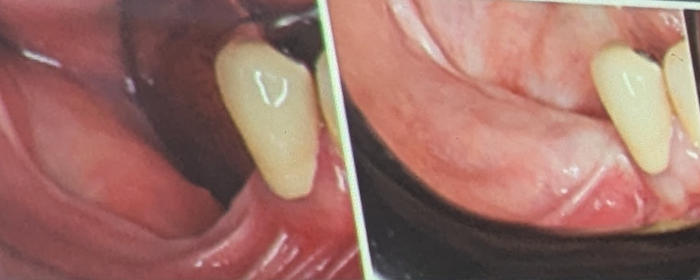
Grow bone
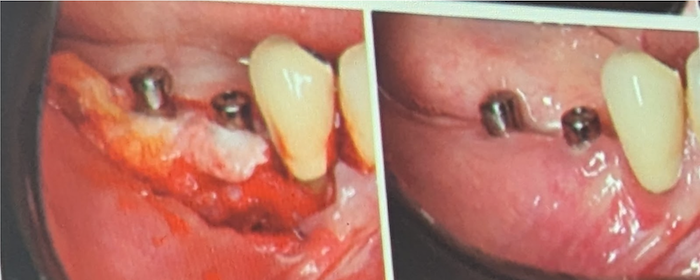
Place implants and thicken tissue
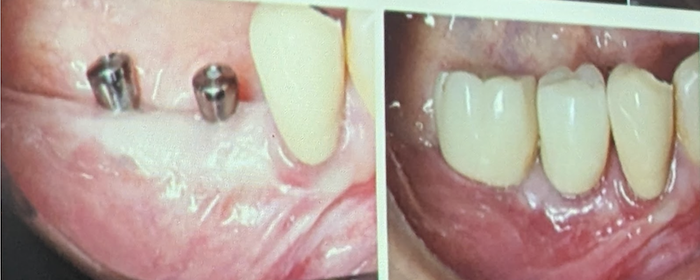
Improve tissue and place final teeth
Case performed by Dr. Robert Silva – Instagram
Is GBR Right for You?
GBR is an excellent treatment option for patients who:
- Have been told they need to remove all their teeth due to bone loss but want to explore other possibilities.
- Have experienced previous implant failure due to insufficient bone support.
- Are willing to commit to a long-term treatment plan for optimal oral health.
- Have good overall health and do not smoke heavily, as these factors can impact healing success.
If you have been considering dental implants or were previously told they are not an option due to bone loss, GBR may be a viable solution. Dr. Sung will carefully assess your case and discuss the best course of action to restore your smile and oral health.
References
- Buser D, Sennerby L, De Bruyn H. “Modern Implant Dentistry Based on Osseointegration: 50 Years of Progress, Current Trends, and Open Questions.” Periodontol 2000. 2017;73(1):7-21.
- Urban IA, Monje A, Lozada JL, Wang HL. “Long-Term Evaluation of Peri-Implant Bone Stability after Reconstruction of Severe Defects Using GBR: A Case Series.” Int J Periodontics Restorative Dent. 2017;37(3):329-337.
- Rocchietta I, Fontana F, Simion M. “Clinical Outcomes of Vertical Bone Augmentation for Implant Placement: A Systematic Review.” J Clin Periodontol. 2008;35(8 Suppl):203-215.
- Aghaloo TL, Moy PK. “Which Hard Tissue Augmentation Techniques Are the Most Successful in Furnishing Bony Support for Implant Placement?” Int J Oral Maxillofac Implants. 2007;22 Suppl:49-70.
If you would like to learn more about guided bone regeneration and whether it’s the right option for you, schedule a consultation with our office today!
Latest Post
- Monday 9 am–7 pm
- Tuesday 10 am–8 pm
- Wednesday 10 am–8 pm
- Thursday 8 am–6 pm
- Friday 8 am–6 pm
- Saturday 8 am–3 pm
- Sunday – Closed