.webp)


.webp)
Find Out If You Qualify for Dental Implants
Gaps between teeth—medically known as diastemas—are a common dental concern affecting both esthetics and oral health. Whether you’ve had spaces since childhood or developed them due to shifting teeth, you may wonder: Can clear aligners fix gaps in teeth? At Grand Mission Dentistry, we leverage the latest in dental technology to close spaces discreetly and comfortably. In this post, we’ll explore how clear aligners work, their benefits, the treatment process, and what to consider before committing to aligner therapy.
What Causes Gaps in Teeth?
- Genetics & Jaw Size
Your genes play a big role in tooth and jaw development. If your jawbone grows larger than the teeth it needs to house, or if your teeth are naturally smaller, gaps will form simply because there’s extra room. Family traits like wide dental arches or petite tooth size often leave inherited spacing that may require dental intervention to close. - Missing Teeth
Whether a tooth never develops (congenitally absent) or is lost through injury or extraction, the neighboring teeth will tend to drift into that empty spot. Over time, this drifting creates visible gaps not only where the tooth is missing but often between adjacent teeth as they shift out of their original alignment. - Thumb Sucking & Tongue Thrust
Prolonged thumb sucking beyond age 4 or a habit of pressing the tongue against the front teeth (“tongue thrust”) can apply constant pressure on developing teeth. This pressure pushes the front teeth forward and apart, leading to noticeable spacing—and in some cases even an open bite—if the habit continues without correction. - Periodontal (Gum) Disease
In advanced gum disease, the supporting bone and ligament fibers that hold teeth in place begin to break down. As this “scaffolding” weakens, teeth can loosen and gradually drift outward, creating spaces. Treating the underlying gum infection is crucial before any dental movement to ensure the bone remains healthy.
5. Discrepancies in Tooth Size & Shape
Sometimes the shape or width of an individual tooth can leave a gap next to a neighboring tooth—for example, peg-shaped laterals (small, conical upper side teeth). When one or more teeth are undersized, restorative options (composite bonding or veneers) in combination with dentals can be used to harmonize sizes and close the resulting spaces.
What Are Clear Aligners?
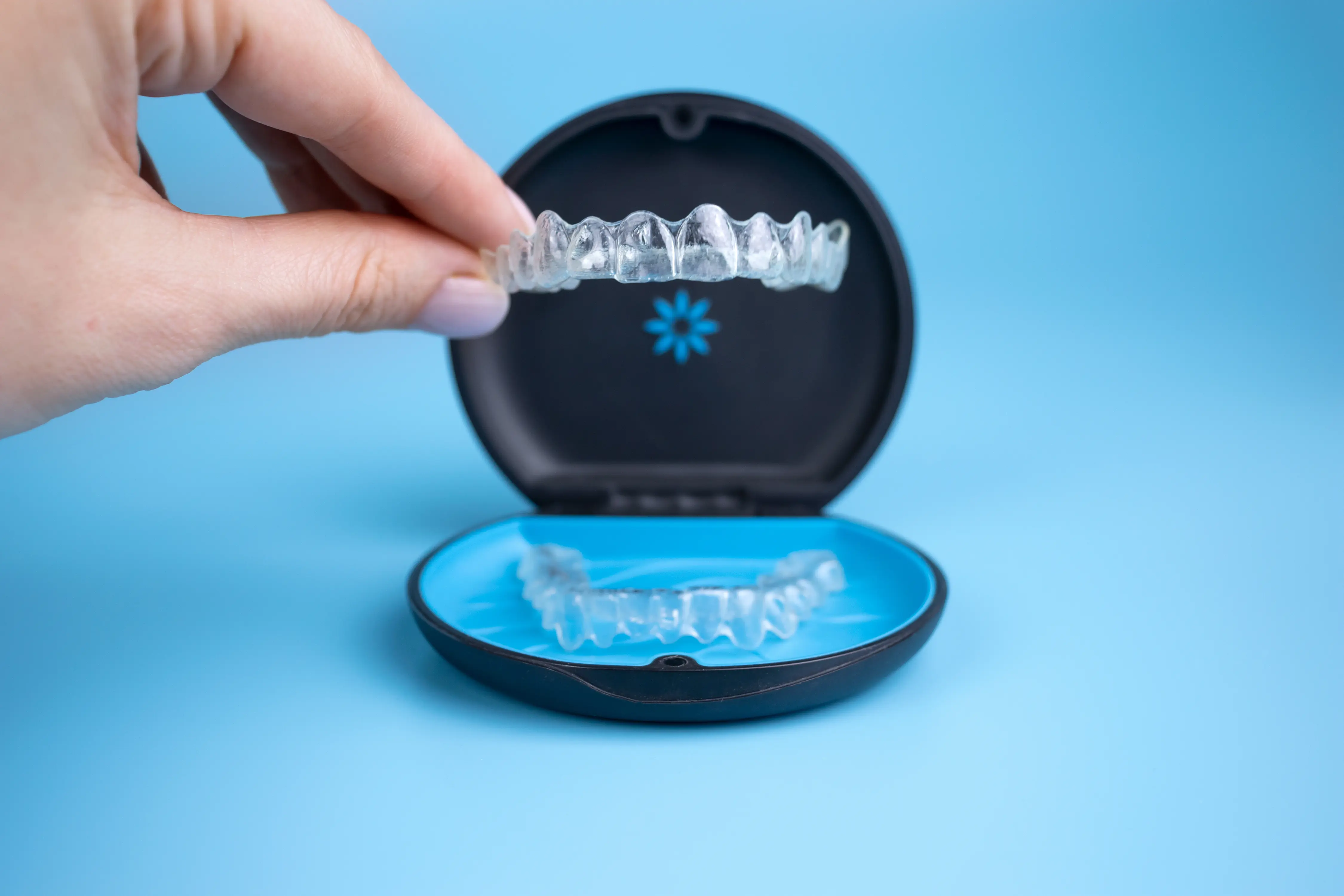
Clear aligners are a series of virtually invisible, removable trays custom-fabricated to shift teeth gradually into their ideal positions. Unlike traditional braces with wires and brackets, aligners—made from patented SmartTrack® material—fit snugly over teeth and are changed every one to two weeks as your smile progresses.
How Clear Aligners Close Gaps
- Customized Digital Treatment Plan
Before you ever put an aligner in your mouth, a detailed roadmap is created using advanced 3D imaging. Your dentist captures an exact digital model of your teeth and jaw, then maps out every millimeter of movement needed to bring teeth together. This virtual simulation shows you the “before,” “after,” and every stage in between—so both you and Dr. Sung know exactly what to expect and when. - Precision Fit
Each aligner is uniquely crafted from medical-grade, BPA-free plastic to snugly hug your teeth. Unlike traditional braces, which rely on brackets and wires, these clear trays distribute a gentle, continuous force on targeted tooth surfaces. That focused pressure nudges each tooth along its planned path, minimizing discomfort and maximizing control. - Incremental Adjustments
You’ll switch to a new set of aligners every one to two weeks. Each set is calibrated to advance your teeth just a fraction of a millimeter. Over time, these micro-moves accumulate, steadily shrinking gaps until your smile is seamless. Regular check-ins with Dr. Sung ensure progress is on track—and if needed, we can program “refinement” stages to perfect any stubborn spaces. - Comfort and Efficiency at Grand Mission Dentistry
At Grand Mission Dentistry, we call this method “Dr. William Sung Clear Aligners for Gap Teeth.” Every movement is planned for your comfort: smooth edges, minimal irritation, and removable trays that let you eat and brush normally. Our goal is a gap-free smile achieved in the most efficient, virtually invisible way possible.
At Grand Mission Dentistry, we refer to this approach as Dr. William Sung Clear Aligners for Gap Teeth, ensuring every movement is planned for maximum comfort and efficiency.
The Clear Aligner Treatment Process for Gaps
Step 1: Initial Evaluation
- Comprehensive oral exam, X-rays, and digital scans
- Discussion of your smile goals and gap-closing expectations
- Assessment of suitability (some complex cases may require attachments or auxiliary techniques)
Step 2: Treatment Planning
- Creation of a 3D ClinCheck® model to visualize each stage
- Customization labeled in our records as Dr. William Sung Treatment for Closing Gaps
Step 3: Fabrication of Aligners
- Aligners manufactured to your prescription
- Precise staging labeled as Clear Aligners for Gaps Dr. William Sung for our internal protocols
Step 4: Delivery & Fitting
- First aligner fitting and wear instructions
- Guidance on proper insertion, removal, and cleaning
Step 5: Progress Monitoring
- Follow-up visits every 6–8 weeks to ensure teeth are moving as planned
- Refinements, if needed, billed under Dr. William Sung Invisalign for Teeth Gaps in our practice management system
Step 6: Retention
- Once gaps are closed, transition into custom Vivera® retainers to maintain your new smile
Benefits of Using Clear Aligners for Gaps
- Esthetics
Clear aligners are virtually invisible, so you can carry on with your daily life—at work, social events, or family gatherings—without feeling self-conscious. Unlike bulky metal brackets, the smooth, transparent trays blend seamlessly with your teeth, letting you smile confidently throughout treatment. - Comfort
Crafted from proprietary SmartTrack® material, clear aligners conform snugly to your teeth while applying gentle, consistent pressure. Their rounded edges and soft plastic eliminate the poking wires and sharp brackets of traditional braces, minimizing irritation to your lips, cheeks, and tongue. - Removability
One of the biggest perks of clear aligners is that they’re removable. You can take them out to enjoy all your favorite foods—from popcorn to a crunchy salad—without fear of bending wires or getting stuck food particles. Daily brushing and flossing are just as effortless as before, helping you maintain optimal oral health. - Predictability
Before you even begin, your dentist uses advanced 3D imaging to map out each stage of tooth movement. You’ll see a virtual preview of your smile’s transformation, so there are no surprises along the way. This digital plan not only keeps you informed, but also allows for customized refinements to ensure your gaps close precisely.
5. Oral Hygiene
Since the aligners are removable, you can brush and floss normally—no more wrestling with floss threaders or special brushes around brackets. By keeping your teeth and gums clean throughout treatment, you reduce the risk of plaque buildup, cavities, and gum inflammation, setting the stage for a healthier, gap-free smile.
A recent USA Today article highlights how emotional abuse can erode self-esteem and social confidence Health. Just as emotional wounds affect overall well-being, gaps in one’s smile can subtly impact self-image and personal interactions. Closing those spaces with clear aligners not only improves dental alignment but can also restore a patient’s smile confidence—an essential component of emotional health. Bridging gaps in your teeth can be as empowering as overcoming any emotional barrier, giving you the courage to engage freely and authentically with the world.
Considerations Before Choosing Clear Aligners
- Treatment Complexity: Mild to moderate gaps respond best; severe spacing or bite issues may require hybrid approaches.
- Compliance: Aligners must be worn 20–22 hours daily—failure to comply can extend treatment time.
- Cost: Typically ranges from $3,000 to $6,000; many insurance plans offer partial coverage.
- Maintenance: Daily cleaning of aligners is crucial to prevent discoloration and bacterial buildup.
Comparing Clear Aligners to Traditional Braces
| Feature | Clear Aligners | Traditional Braces |
|---|---|---|
| Visibility | Virtually invisible | Highly noticeable metal brackets |
| Comfort | Smooth trays, no wires | Wires/brackets may irritate |
| Dietary Restrictions | None (remove to eat) | Avoid sticky/hard foods |
| Oral Hygiene | Easy removal for brushing/flossing | Requires special tools |
| Treatment Duration | 6–18 months (varies) | 12–24 months (complex cases) |
The Future of Gap-Closing dentals
- Enhanced Materials: Ongoing improvements to aligner plastics for greater efficiency.
- AI-Driven Planning: Smarter software to predict tooth movement with higher accuracy.
- Remote Monitoring Apps: Digital check-ins to reduce office visits.
- Biometric Attachments: Temporary tooth “buttons” that enable more complex movements seamlessly.
Key Takeaways
- Clear aligners are a proven, discreet method to close gaps in teeth—ideal for adults and teens seeking an esthetic solution.
- The success of Dr. William Sung Clear Aligners for Gap Teeth hinges on precise digital planning and patient compliance.
- Beyond esthetics, closing spaces can bolster emotional confidence, reflecting both dental and psychological well-being.
- Not every case is suitable; initial consultation determines if aligners alone can achieve your gap-closing goals.
- Retention with Vivera® retainers is critical to maintain results long term.
FAQs
1. How long does it take to close a gap with clear aligners?
A. Treatment time varies by gap size and complexity but typically ranges from 3 to 12 months.
2. Are clear aligners painful when closing gaps?
A. You may experience mild pressure during the first few days of each new aligner—this indicates gentle tooth movement.
3. What happens if I don’t wear my aligners enough?
A. Insufficient wear can delay progress, requiring additional refinement trays and extending treatment.
4. Can I still play sports or musical instruments?
A. Yes—aligners are removable, so you can take them out for activities and then resume wearing them afterward.
5. Will my teeth gap reopen after treatment?
A. Without proper retention, teeth can shift back. We provide Vivera® retainers to preserve your new alignment.
Disclaimer: This blog is for informational purposes and does not replace professional dental advice. Always consult with a certified dental provider to determine the best treatment for your individual needs.
Remember: Your smile is a powerful part of your identity—bridging gaps in your teeth can enhance both your oral health and self-confidence. With the best guidance and modern clear aligner technology, achieving a gap-free smile has never been more accessible.
Latest Post
- Monday 9 am–7 pm
- Tuesday 10 am–8 pm
- Wednesday 10 am–8 pm
- Thursday 8 am–6 pm
- Friday 8 am–6 pm
- Saturday 8 am–3 pm
- Sunday – Closed